Why reconstruction
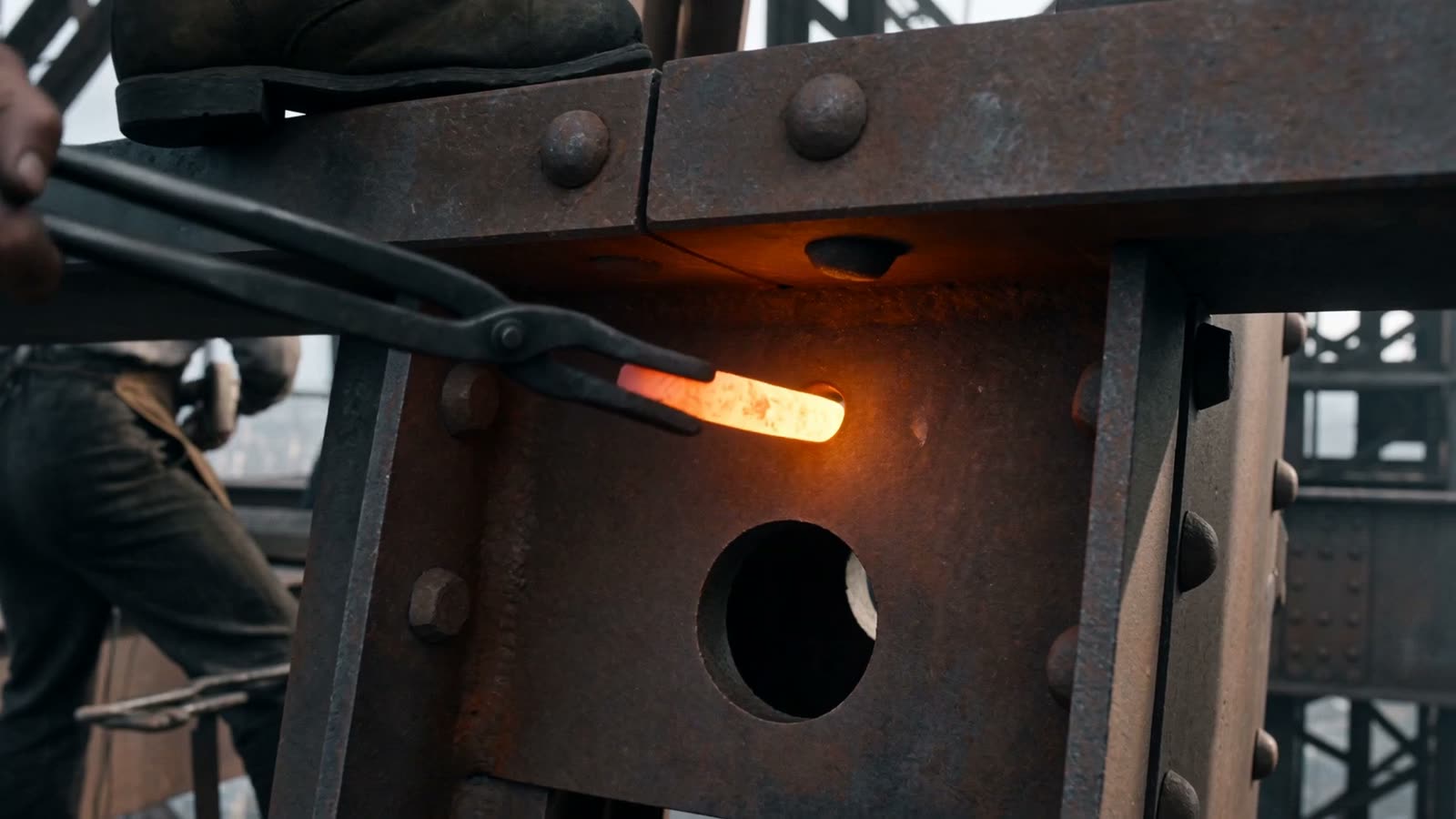
Every history channel is limited by what survives: a handful of photographs, an engraving, a painting — and a lot of slow zooms across all three. Every account of the Eiffel Tower’s caissons is illustrated with the same three engravings, because that is all there is. We are not restricted to the record. We reconstruct the thing itself — the caisson sinking beneath the Seine, the rivet at working heat — photoreal, as if a documentary crew had been there with modern equipment.
That footage cannot be archive, because no archive exists. It is not passed off as archive either: no sepia, no fake film grain, no counterfeit period documents. The proposition is the opposite of deception — footage that is openly impossible, of events that are rigorously real.
How a film gets made
- Research firstThe story is found in the record: what was built, how it worked, why that explains what happened to it. Mechanism first, always.
- A verified scriptEvery factual claim is checked against sources before it is narrated. What cannot be verified is cut; where historians disagree, the film says so or the guide flags it.
- Reference platesLocations, machines and faces are established as fixed reference images first, so the same iron, the same rooms and the same people persist from shot to shot.
- The shootEvery set-up is filmed against those references, several takes of each, and judged like rushes — episode one ran to around a hundred and thirty shots, in variants, for fourteen minutes of finished film. Most of what we make is never seen.
- The editSelection is the real work: most of what we generate is discarded. Narration is recorded, and the sound is built in the edit, layer by layer — not generated.
- DisclosureEvery upload is labelled as altered/synthetic content on YouTube, every guide carries this link, and this page stays the canonical explanation.
The rules the tools must obey
- No invented words or thoughts. Real historical figures are shown doing what the record says they did. Nobody is scripted saying things they never said.
- No recurring faces. Every face is created for its episode and never appears in another. There is no synthetic presenter and no “host”.
- Representative figures, honestly used. Where a film follows an anonymous worker, that figure stands for the real, undocumented hundreds — and the narration never pretends otherwise.
- Period accuracy is a constraint, not a vibe. Architecture, clothing, tools and construction technique are checked era by era, and the tower is venetian red in 1887 because it was.
- No fake archive, ever. Nothing is aged, scratched or passed off as a period document — on the films or on this site.
What we publish, and what we don’t
Every guide publishes its sources in full and flags the points where the record is genuinely contested. The workflow above is public. The craft underneath it — the reference systems, the generation discipline, the verification method the films run on — is the studio’s trade, and stays private.
Commissions — reconstruction films for museums, heritage bodies and producers — are handled by our studio, New View Studio. If there is history your institution owns and no camera ever saw, that is exactly the work we take.